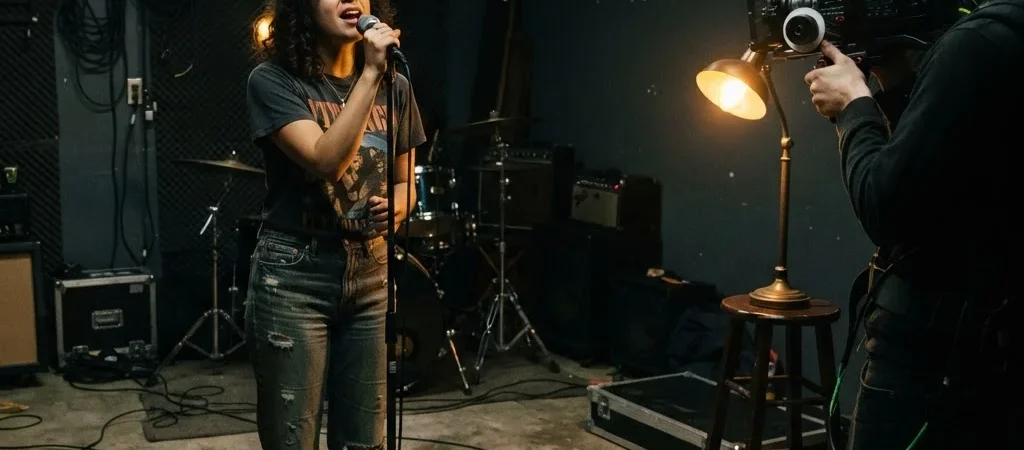
Watch a performance video with the sound turned down and the edit starts to speak for itself. A cut that lands on every snare can make a song feel more forceful; a shot held through the same bar can make it feel uneasy or intimate. The image is not just decoration around the track. It can reshape how the track moves.
Notice Where the Edit Lands
Pick one transition and listen for what the music is doing at that exact moment. Does the camera cut with the kick drum, arrive just after the lyric, or stay still while the beat changes underneath it? When the visual rhythm pushes against the musical one, the tension can be more interesting than a perfectly matched edit.
Read the Frame, Not Just the Fit
A low camera angle, a crowded background, or a face held at the edge of the frame can carry meaning before a performer says a word. Look at who gets the center, what the light leaves in shadow, and whether the location feels observed or arranged. These decisions shape the world the song seems to inhabit.
Give the Image Its Own Job
The strongest visual companion does not need to illustrate every lyric. It can add a setting, a point of view, or a new kind of pressure that the audio alone does not provide. On the next watch, follow the cuts and composition first; then play it again and hear how the images change the track.